2020-Present
Director, CTO/CIO
PortIT
I co-founded PortIT to bridge banking and crypto through modular, as-a-Service infrastructure. I lead the technology vision and engineering culture while building brands like Quid, Toonie, Elviria, Streamable Finance, and RampX.
Highlights
- API-First Banking-aaS Platform handling hundreds of millions in transaction volume
- Profitable from Day One – Multi-million R&D with year 1 profitability
- Global & local payments + MasterCard/Visa Cards
- AI-powered KYC/KYB and fraud detection
- Fully automated K8s infrastructure with IaC
- Fully remote engineering team
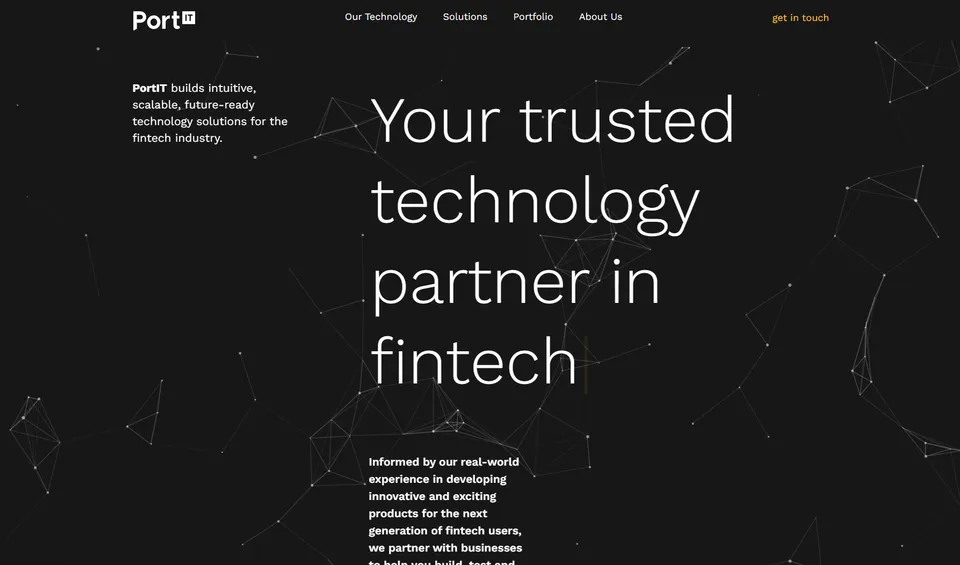
I co-founded PortIT in 2019 (launched February 2020) with a mission to bridge banking and crypto through modular, as-a-Service infrastructure.
My Mission
I bring intuitive, scalable, future-ready technology and consultancy solutions to the fintech industry. Informed by my real-world experience in developing products for a new generation of fintech users, I partner with businesses to build, test and improve digital applications from inception to go-live.
My Mission: To be the technology partner of choice for fintech businesses.
Building the Ecosystem
With more than a decade in the FinTech industry, my objective is to consolidate the company footprint and expand PortIT’s FinTech offering by building multiple brands:
- Quid: Business and banking tools ecosystem for entrepreneurs
- Toonie: Digital financial services
- Elviria: Investment and portfolio tracking solutions
- Streamable Finance: Real-time payment streams (see dedicated timeline entry)
- RampX: Crypto-fiat bridge infrastructure
My Role as CTO
As CTO and Co-Founder, I assembled a hand-picked engineering team from the best talent I’d worked with throughout my career. From day one, I established a fully remote, distributed team across Europe with a deliberately flat organizational structure that prioritizes ownership, accountability, and rapid feedback loops.
Building the Foundation (2020-2021)
The first 15 months were dedicated to intensive R&D, building a complete Banking-as-a-Service infrastructure from the ground up for our flagship brand, Quid. I led the architectural decisions that would define our platform’s DNA:
- Technology Stack: Java Spring Boot for backend services, ReactJS for web applications, Flutter for mobile apps
- Infrastructure: Cloud-agnostic architecture on AWS with full Infrastructure as Code automation, enabling complete production environment deployment in ~3 minutes
- Architecture: 30+ microservices architecture totaling ~250,000 lines of code in year one, 160+ repositories and 1/2 Million LoC in 2025
- Integration Layer: Kong API Gateway, RabbitMQ for message queuing and event sourcing, PostgreSQL for operational data
- Multi-tenancy: Environment isolation and brand separation through automated infrastructure provisioning
The most significant technical challenge was achieving modularity and flexibility without compromising performance, data segmentation, or architectural principles. Every decision was informed by years of fintech experience. I was learning from past mistakes and applying battle-tested patterns.
Scaling and Evolution (2021-Present)
As the platform matured, we onboarded tens of thousands of customers processing hundreds of millions in transaction volume annually. I established strategic partnerships with tier-1 fintech infrastructure providers including Clear Bank, Currency Cloud, Clear Junction, Stripe, and Wallester.
My role evolved from building features to architecting developer experience and strategic client partnerships. While I remain hands-on with problem-solving (debugging complex infrastructure issues and optimizing critical paths), my focus shifted to:
- Developer Experience: Streamlining tooling, CI/CD pipelines, and local development workflows
- Compliance & Risk: Collaborating closely with compliance professionals to design modular, audit-friendly backoffice procedures for fund management, customer onboarding, and KYC/KYB processes
- Strategic Architecture: Ensuring our platform remains performant, secure, and adaptable as we scale across multiple brands
- Client Engagement: Direct interaction with key clients to understand requirements and translate them into technical solutions
Engineering Culture & Practices
I cultivated a culture where the team recognizes that we are the only ones responsible for fixing what isn’t optimal—creating an exceptionally short feedback loop. Our flat structure means engineers own their domains end-to-end, from design through production support.
Key practices we established:
- Automated testing pyramid: Unit, integration, contract, and end-to-end tests running on every commit
- Infrastructure as Code: Terraform and Kubernetes manifests version-controlled alongside application code
- Observability-first: Structured logging, distributed tracing, and comprehensive metrics from day one
- Blameless post-mortems: Every incident is a learning opportunity documented and shared across the team
- Asynchronous communication: Leveraging documentation, decision records, and async updates to accommodate distributed timezones
- Bi-weekly architectural reviews: Collaborative sessions where engineers present designs for feedback before implementation
- Continuous stakeholder alignment: Regular demos and transparent roadmap sharing with product, compliance, and business teams
Technical Philosophy in Practice
My approach centers on pragmatic innovation—leveraging cutting-edge technologies where they solve real problems, but never adopting technology for its own sake. Every architectural decision optimizes for:
- Modular, composable services that can be mixed and matched across brands
- Cloud-agnostic design ensuring we’re never locked into a single provider
- Security and compliance by default, not as an afterthought
- Developer productivity through automation, clear interfaces, and excellent documentation
- Financial-grade reliability with multi-region failover and zero-downtime deployments
PortIT represents the culmination of over a decade in fintech. It’s a platform where I’ve applied every lesson learned from traditional banking, payment systems, and blockchain to create infrastructure that makes financial innovation accessible, compliant, and scalable.